Corporate Wellness Partnerships:
Better Sleep and Mental Health for Your Team
Move beyond generic wellness perks.
We deliver clinical-grade sleep interventions that restore peak performance, reduce absenteeism, and lower mental health claims.
The Cost of Insomnia
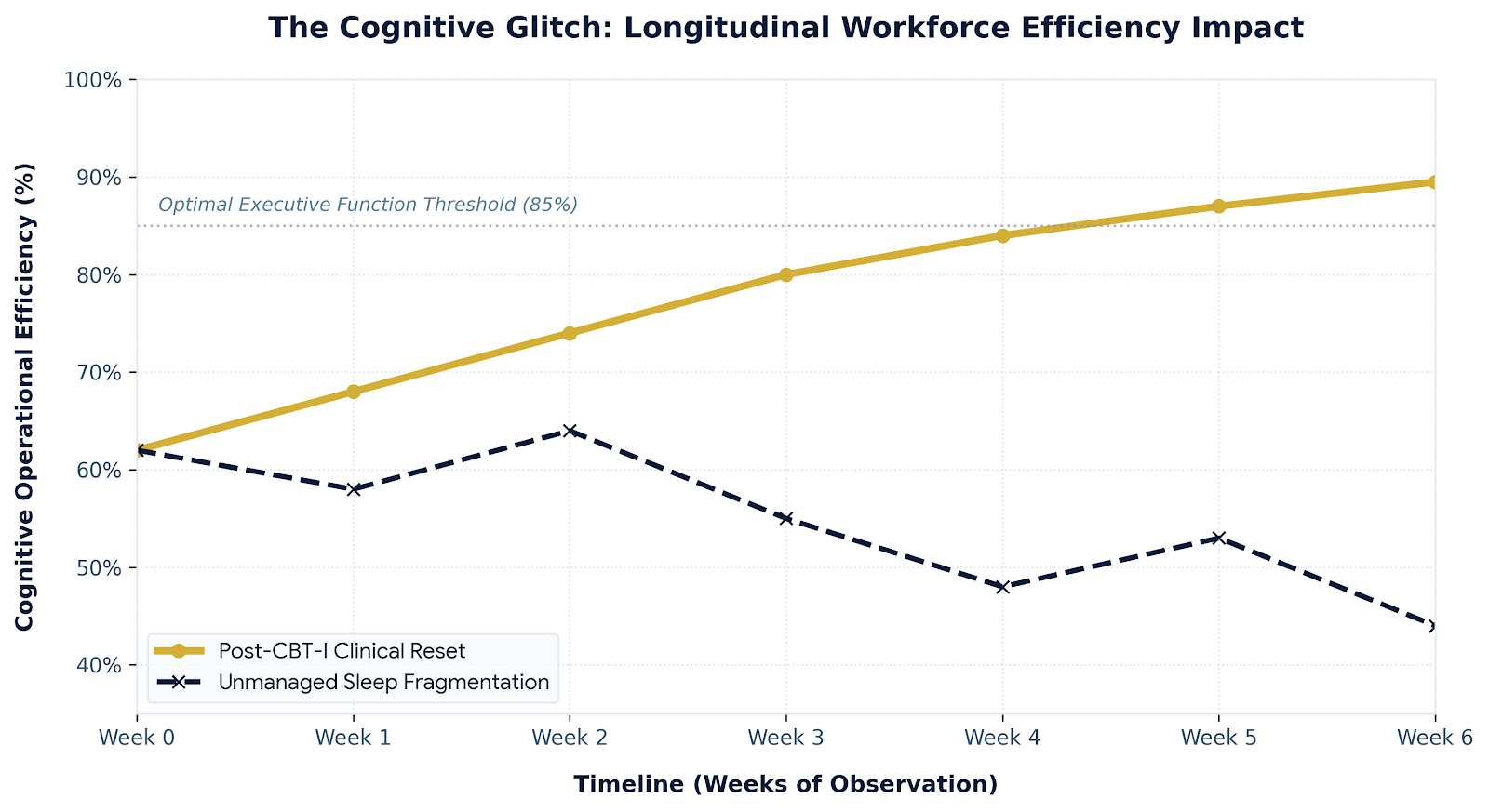
Chronic sleep fragmentation is no longer just an individual wellness issue; it is a critical corporate liability that severely erodes organizational infrastructure and fiscal health. Research published by the American College of Physicians identifies chronic insomnia as a profound driver of functional impairment, noting that the physiological toll of fragmented sleep directly undermines cognitive processing speed, executive decision-making, and emotional regulation in leadership roles.
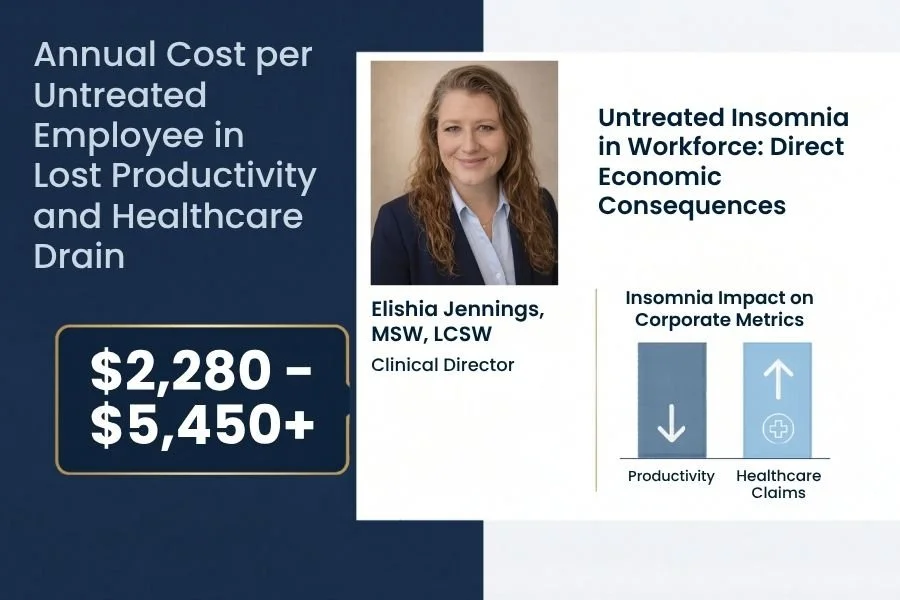
When an employee suffers from untreated insomnia, the economic consequences to the enterprise are substantial and measurable: data indicates that these individuals cost employers an estimated $2,280 to $5,450 annually per employee in lost productivity alone, primarily driven by presenteeism—where workers are physically present but operating at heavily degraded capacities.
Employee burnout, chronic stress, and sleep deprivation don't just affect morale—they directly impact your bottom line through lost productivity, increased healthcare costs, and high turnover. Restoration Psychotherapy offers targeted, engaging wellness partnerships designed to equip your workforce with practical tools for resilience and rest.
We move beyond generic "self-care" advice to deliver evidence-based strategies rooted in clinical psychology and behavioral science.
The Cost of Insomnia
Chronic sleep fragmentation is no longer just an individual wellness issue; it is a critical corporate liability that severely erodes organizational infrastructure and fiscal health. Research published by the American College of Physicians identifies chronic insomnia as a profound driver of functional impairment, noting that the physiological toll of fragmented sleep directly undermines cognitive processing speed, executive decision-making, and emotional regulation in leadership roles.
When an employee suffers from untreated insomnia, the economic consequences to the enterprise are substantial and measurable: data indicates that these individuals cost employers an estimated $2,280 to $5,450 annually per employee in lost productivity alone, primarily driven by presenteeism—where workers are physically present but operating at heavily degraded capacities.
Employee burnout, chronic stress, and sleep deprivation don't just affect morale—they directly impact your bottom line through lost productivity, increased healthcare costs, and high turnover. Restoration Psychotherapy offers targeted, engaging wellness partnerships designed to equip your workforce with practical tools for resilience and rest.
We move beyond generic "self-care" advice to deliver evidence-based strategies rooted in clinical psychology and behavioral science.
Our Corporate Offerings
Sleep & Performance Seminars: Leveraging the principles of CBT-I to teach teams how to improve sleep hygiene, overcome acute insomnia, and restore their natural energy levels for better daytime performance.
Burnout Prevention Workshops: Teaching actionable CBT and DBT skills to help employees manage chronic workplace stress and regulate their nervous systems.
Management Training: Equipping leadership with the tools to recognize signs of mental health struggles in their teams and foster a psychologically safe, high-performing environment.
Custom Lunch & Learns: Tailored 45-to-60-minute sessions addressing the specific stressors of your industry.